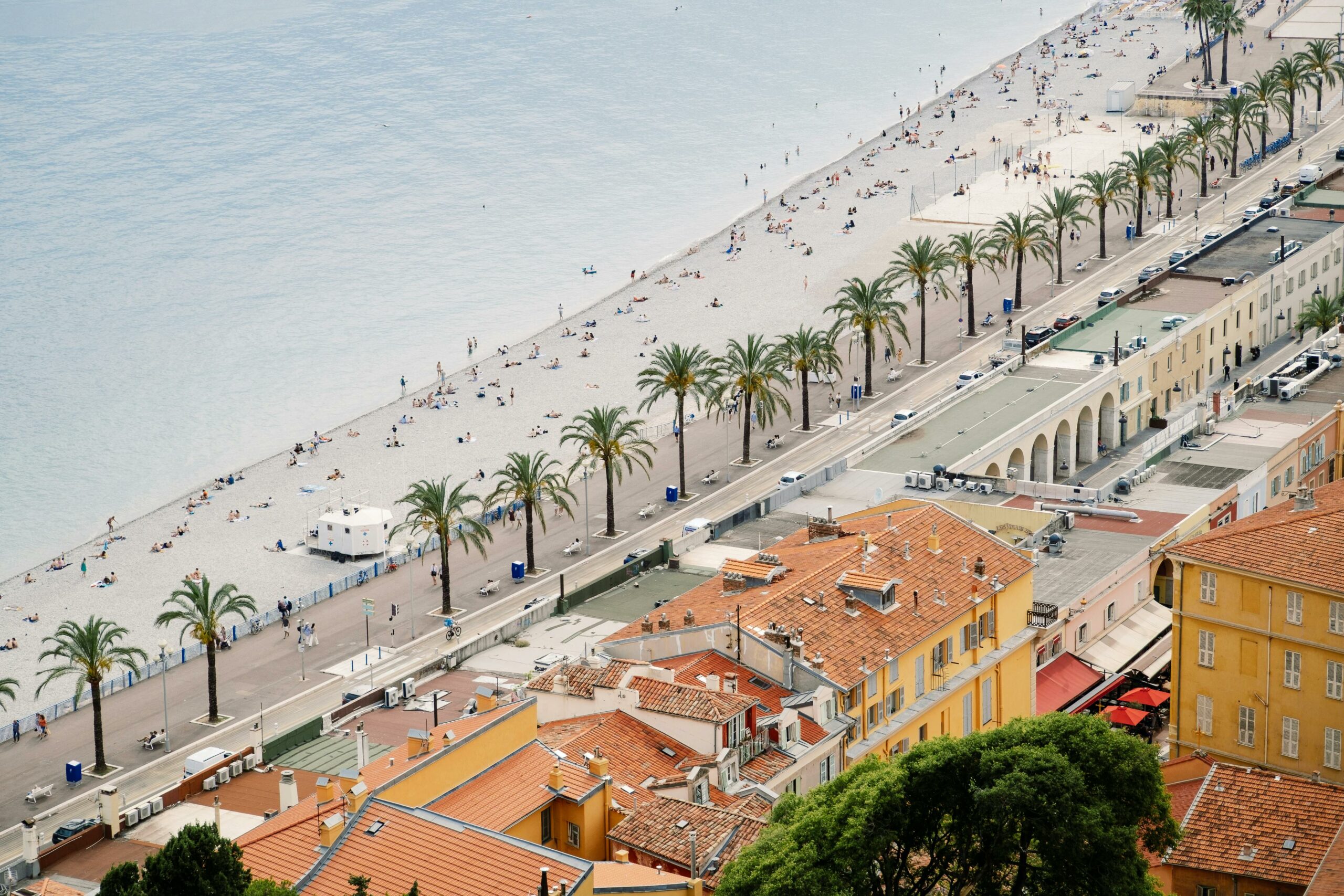
10 Stunning French Beaches You’ve Probably Never Heard Of
Everyone knows the Côte d’Azur. Nice, Cannes, Saint-Tropez – gorgeous, sure, but also packed, pricey, and honestly a bit predictable at this point. France has over 5,500 kilometres of coastline, and some of the most beautiful stretches are the ones that barely show up on anyone’s Instagram feed. Hidden coves, wild Atlantic shores, turquoise water that looks more Caribbean than European. They exist. You just need to know where to look.
Getting Off the Beaten Path : France’s Hidden Coastline
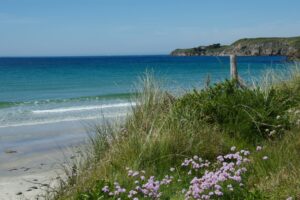
The trick is getting off the main tourist trail. Some of these beaches are best reached by foot, others sit near small coastal villages where the biggest attraction is a crêperie and a sunset. If you’re planning a coastal trip to France and want to combine beach time with camping or outdoor stays, https://www.camping-a-la-mer.fr is a solid resource for finding seaside accommodation. But first – let’s talk about the beaches themselves.
1. Plage de Saleccia – Corsica
This one is wild. Literally. Plage de Saleccia sits on the northern tip of Corsica, in the Agriates desert, and you can only get there by boat, 4×4 track, or a 3-hour hike from the nearest road. White sand, turquoise water, pine trees right up to the shore. It feels completely untouched.
There are no restaurants, no sun lounger rentals, nothing. Bring water, bring food, bring shade. The effort to get there keeps the crowds thin even in August, which is rare for Corsica. I’d say it’s probably one of the most beautiful beaches in all of Europe, and I don’t say that lightly.
2. Plage de l’Espiguette – Camargue
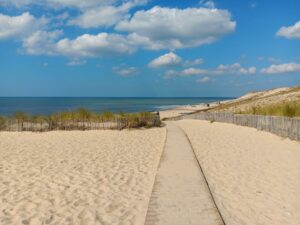
Ever wanted to feel like you’re walking across a desert that suddenly ends at the sea ? That’s Espiguette. It stretches for about 10 kilometres along the coast near Le Grau-du-Roi in the Camargue region. Massive sand dunes, almost no development, and the beach is so wide you can always find a spot to yourself.
The water is shallow and warm in summer, making it great for families. Wind can pick up in the afternoon though – which is exactly why kitesurfers love it. If you want emptiness and big skies, this is your place.
3. Plage de Donnant – Belle-Île-en-Mer, Brittany
Belle-Île is an island off the coast of southern Brittany, about a 45-minute ferry from Quiberon. Plage de Donnant is its star – a dramatic crescent of sand between dark cliffs, facing the open Atlantic. The waves here are proper. Surfers know about it, but somehow it’s still not overrun.
The water is cold, let’s be honest. This is Brittany. But the scenery is spectacular, especially in the late afternoon light. Monet painted here, and when you see it, you understand why.
4. Calanque d’En-Vau – Near Marseille
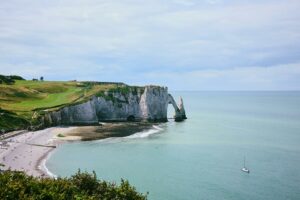
The Calanques are famous, sure. But most visitors stick to Sormiou or Sugiton because they’re easiest to access. En-Vau is the one that requires a bit more commitment – about a 45-minute to one-hour hike down a rocky trail from the car park at Col de la Gardiole. Steep in places, not great in flip-flops.
But the payoff ? A narrow fjord-like inlet with vertical white cliffs and water so blue it almost doesn’t look real. It’s a popular spot with rock climbers too – you’ll see them scaling the cliff faces right above the beach. Bring shoes you can hike in, and water shoes for the pebbly shore.
5. Plage de Palombaggia – Southern Corsica
Okay, Palombaggia isn’t exactly unknown among the French – it regularly tops “best beaches in France” lists in French magazines. But internationally ? Most British travellers have never heard of it. The sand is fine and almost pink, the water is crystal clear, and the red rocks and umbrella pines framing the shore give it an almost tropical feel.
It’s near Porto-Vecchio in southern Corsica. July and August get busy, but visit in June or September and you’ll have something close to paradise with a fraction of the people. Parking can be a pain in peak season – arrive before 10am or forget it.
6. Plage des Grands Sables – Île de Groix, Brittany
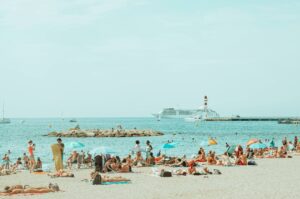
Here’s a fun fact : this is one of only two convex beaches in Europe. The sand curves outward into the sea rather than inward, which gives it a really unusual shape. It’s on the small island of Groix, a 45-minute ferry ride from Lorient in Brittany.
The beach itself shifts and changes shape with the tides and currents – it’s actually moved several hundred metres along the coast over the past century. The island has maybe 2,300 permanent residents and feels wonderfully quiet. Rent a bike, ride to the beach, swim, eat crêpes. Perfect day, honestly.
7. Plage de l’Île Vierge – Crozon Peninsula, Brittany
Another Breton gem, and arguably the most scenic on this list. It’s a small beach at the foot of dramatic sea cliffs on the Crozon Peninsula in Finistère. You reach it via a coastal path and a steep descent – about 20 minutes from the nearest car park. The turquoise water here genuinely surprises people. You don’t expect it in Brittany.
It’s tiny, so it does fill up on hot summer days. Go early, go in shoulder season, or go on a weekday. The hike in and out is part of the charm. Bring a picnic – there’s nothing to buy once you’re down there.
8. Plage de la Côte des Basques – Biarritz
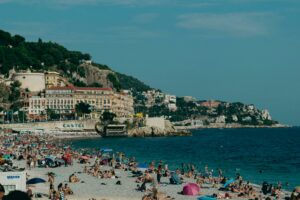
Biarritz itself isn’t exactly hidden, but this particular beach often gets overlooked by visitors who stick to the Grande Plage in the centre. Côte des Basques faces south, is backed by cliffs, and is considered the birthplace of surfing in Europe – the first surf club in France was established here in 1957.
The vibe is completely different from the glitzy main beach. More relaxed, more local, more surfy. Be aware that the beach disappears at high tide – check tide times before you go, or you’ll find yourself standing on rocks wondering where the sand went.
9. Plage de Notre-Dame – Île de Porquerolles
Porquerolles is a car-free island off the coast of Hyères, near Toulon. Plage de Notre-Dame is about a 30-minute bike ride or walk from the village, through pine and eucalyptus forest. The beach is long, the sand is pale, and the water is sheltered and calm.
What makes it special is the setting – it really does feel like you’ve left mainland France behind. No cars, no noise, just cicadas and the sea. The island limits visitor numbers in summer, which helps keep it from getting too crowded. Ferries run regularly from La Tour Fondue on the Giens peninsula.
10. Plage de Pampelonne – Ramatuelle
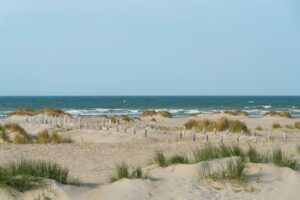
Wait – isn’t this the famous Saint-Tropez beach ? Well, sort of. Pampelonne is technically in Ramatuelle, not Saint-Tropez, and while parts of it are lined with exclusive beach clubs, the public sections are surprisingly laid-back. The beach stretches nearly 5 kilometres, and if you walk away from the club areas, you’ll find wide-open sand with space to breathe.
I’ve put this one last because it’s the most borderline “well-known” on the list. But I think most people don’t realise just how much of this beach is free, open and genuinely beautiful without the posing and the €25 salads. Walk south, find your spot, and enjoy it.
How to Make the Most of These Beaches
Go in shoulder season. June and September are ideal for most of these – warm enough to swim, quiet enough to enjoy. July and August work too, but expect more company at the accessible ones.
Bring supplies. Most of these beaches have little or no facilities. Water, snacks, sun protection, a proper bag for your rubbish. Leave nothing behind.
Check access conditions. Some require hikes, boat rides, or ferries. Look up trail conditions and ferry schedules before you set off. Tide times matter for beaches like Côte des Basques.
Respect the environment. Several of these are in protected natural areas – the Calanques, Porquerolles, the Agriates. Stay on paths, don’t pick anything, and keep noise down. These places are beautiful precisely because they’ve been looked after.
France has far more to offer than the crowded Riviera beaches that everyone defaults to. Some of the best coastal experiences are the ones that take a little more effort to reach – and that’s exactly what makes them worth it.